
Threat Actor Intelligence
Know which adversaries are coming for you.
Knowing you have a weakness isn’t enough — you need to know who would exploit it. Threat Actor Intelligence connects NodeZero’s proven attack paths to the real adversary groups targeting your sector, so you prioritise by who is actually hunting you, not by CVE count.
Adversary-aligned context, not just vulnerabilities
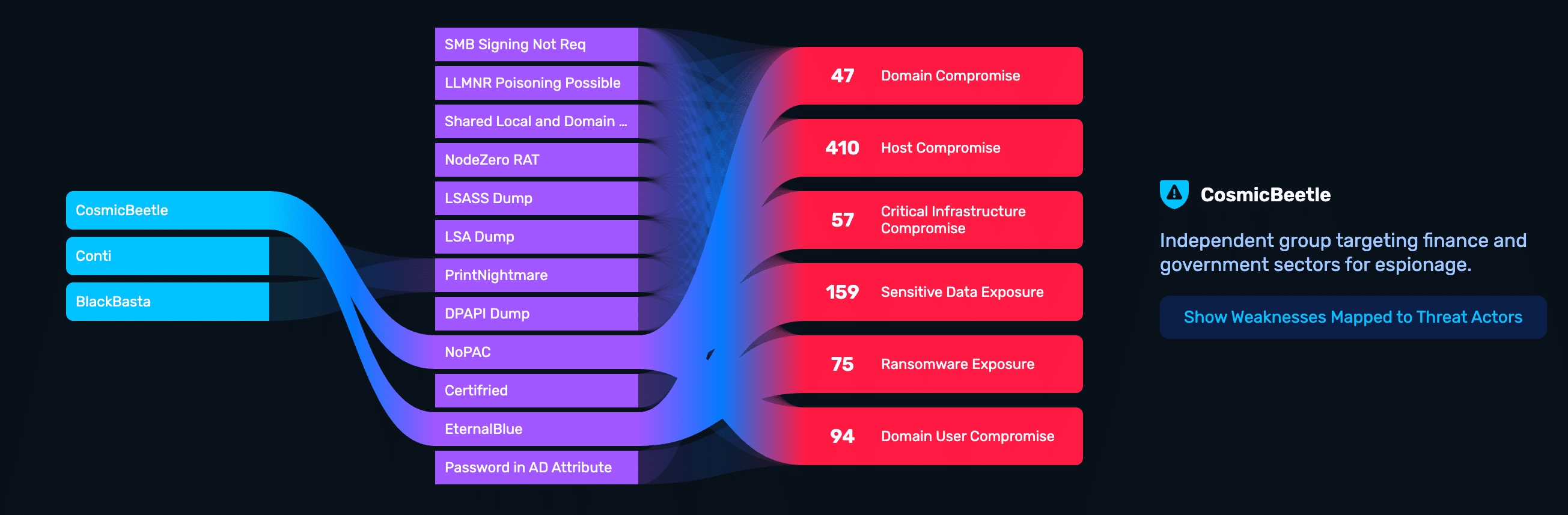
Threat Actor Intelligence links the exploitable weaknesses in your environment to the adversaries who weaponise them. NodeZero maps every exploit to MITRE ATT&CK tactics, correlates them with known threat groups, and shows how those paths lead to ransomware, data theft or operational loss — turning vulnerability noise into adversary-driven prioritisation.
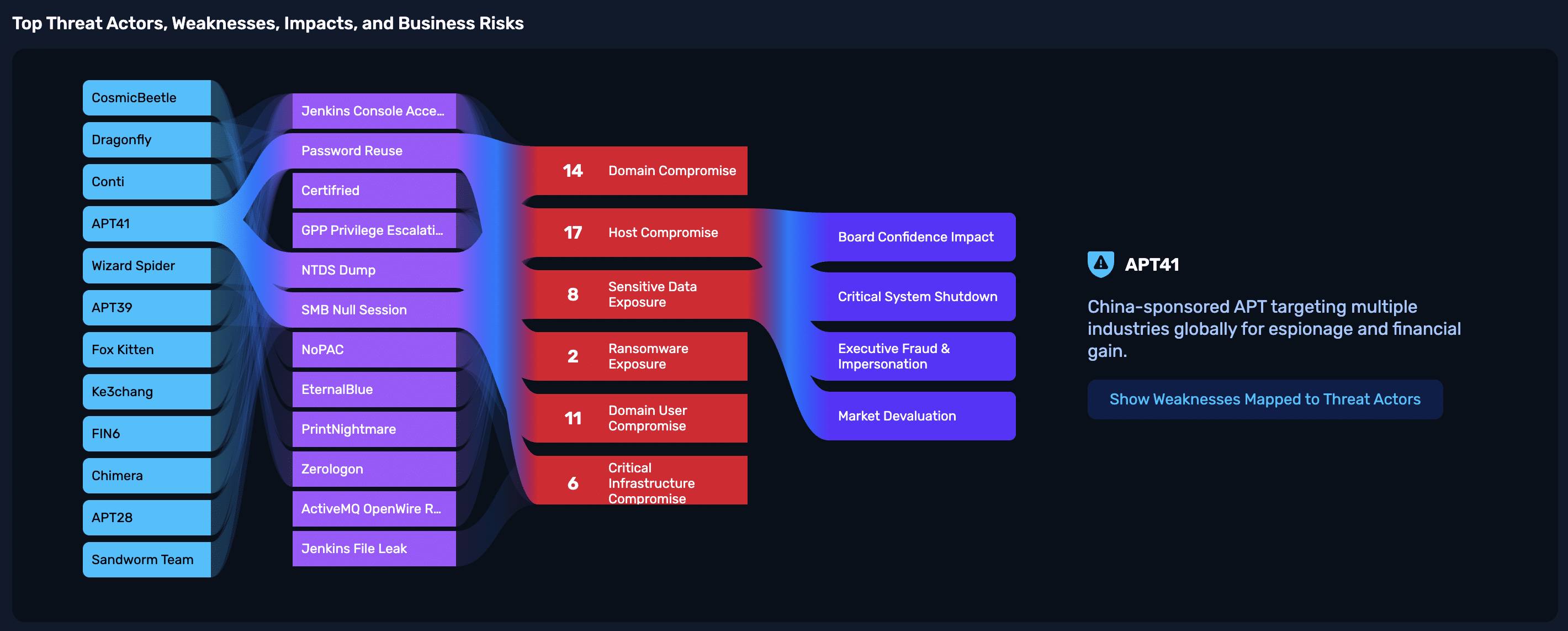
Mapped to the groups targeting Australian and New Zealand organisations
Every NodeZero exploit is aligned to MITRE ATT&CK and correlated with real groups — the ransomware crews and state-aligned actors the Australian Signals Directorate tracks in its annual Cyber Threat Report as active against ANZ sectors. From AKIRA and LockBit hitting health and critical infrastructure, to Volt Typhoon and Salt Typhoon pre-positioning in telecommunications and critical infrastructure, you see the tradecraft behind the threat — not just a CVE list.
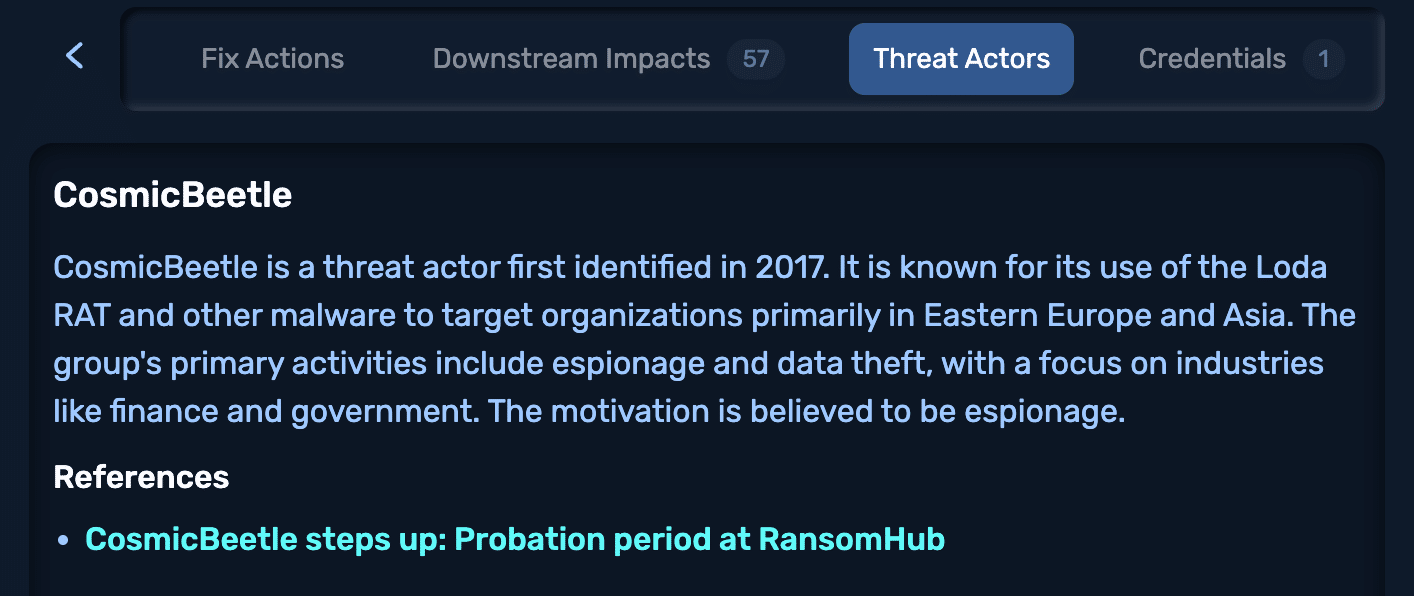
Built into the workflow your team already uses
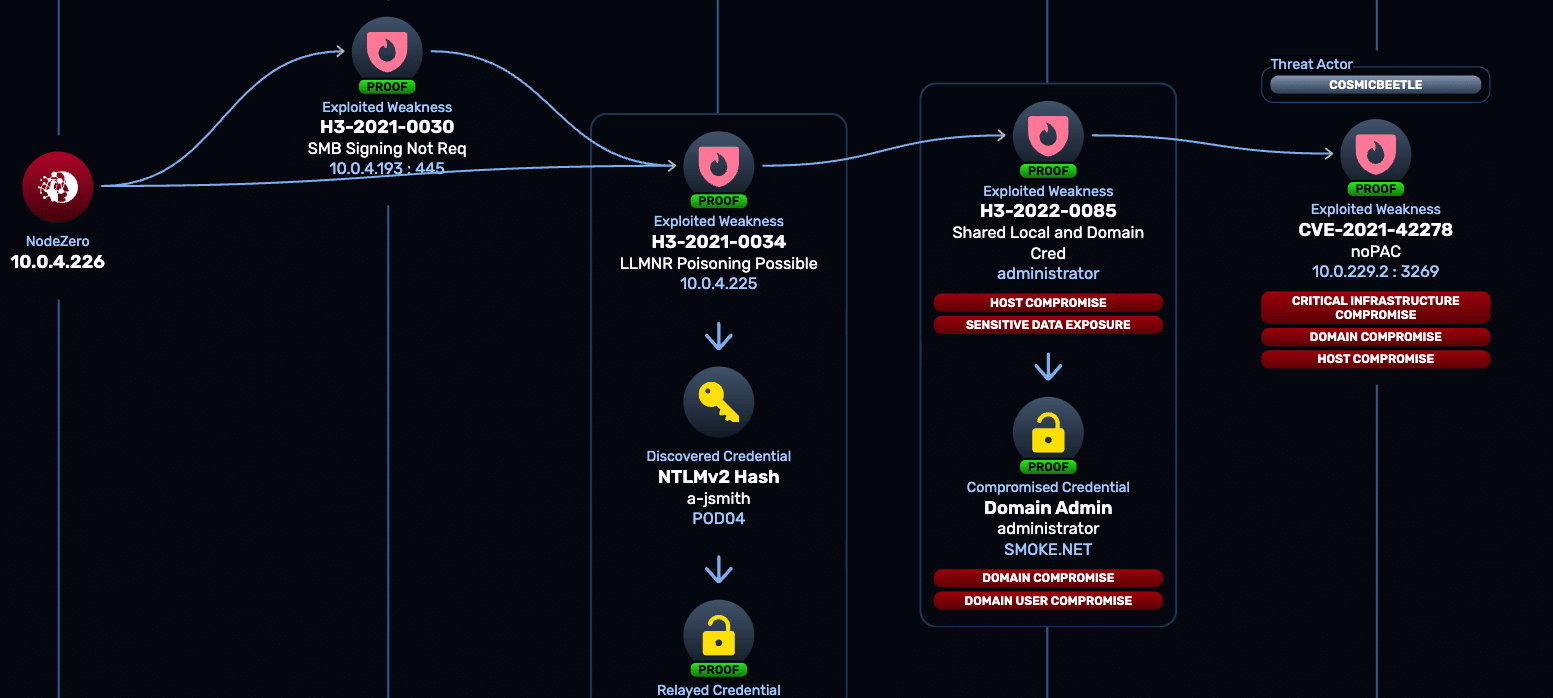
Threat Actor Intelligence works inside the views your team already uses. A unified threat view surfaces which adversaries are most likely to hit your environment and abuse your key weaknesses. It connects those real adversaries to the exploitable weaknesses they commonly use — and the impacts that follow. On any attack path, you can pinpoint which CVEs and TTPs known threat actors are currently exploiting. And each adversary is profiled in detail — origin, objectives and techniques — so the group behind the tradecraft is never abstract.
Threat-actor pressure, not CVE headlines
NodeZero ranks your weaknesses by the intersection of business impact, adversary activity and exploitability — a single threat-pressure signal. Stop chasing CVE headlines and focus on what ransomware crews, nation-states and financial-crime groups are actually exploiting in the wild.

See it respond to live adversary activity
Threat Actor Intelligence is built to turn a headline-grabbing campaign into a specific question about your environment: are the weaknesses these actors exploit present here, and where do they lead? Watch NodeZero work that question end to end.
Risk your board and auditor understand
See how a single weakness escalates into domain compromise, data theft, ransomware or fraud — with clear ties to financial, regulatory and operational impact. Adversary mapping and attack-path visualisations translate technical findings into terms executives, boards and auditors act on. Adversary-aligned prioritisation supports the risk-based remediation evidence expected under the Essential Eight (maturity level 2–3), the ISM and SOCI risk-management obligations.
From intel to fixed
Threat Actor Intelligence feeds the NodeZero MCP Server to orchestrate and verify remediation in a continuous loop — so adversary intel becomes closed attack paths, not another report.
Shift from reactive triage to real-world readiness
We know who exploits our weaknesses
Every exploit ties to MITRE ATT&CK and real groups, showing who weaponises our exposures.
We prioritise by real threat pressure
Remediation is guided by business impact, adversary activity and exploitability — not static CVE scores.
We brief the board with confidence
Adversary mapping turns findings into business risk that leadership and regulators understand.
See which adversaries match your exposures.
Run a threat-informed test against your environment with the Drochaid team.