


Vulnerability Risk Intelligence
Turn scanner noise into a short, validated list.
Vulnerability Risk Intelligence takes your Tenable, Qualys or Rapid7 exports and re-ranks them from the attacker’s perspective — by proof of exploit, threat-actor pressure and business risk. Stop triaging thousands of CVEs in a spreadsheet and work a short list where every item has been validated against your real attack surface — giving your VM, SecOps and OffSec teams one prioritised list instead of three views of the same noise.
Make vulnerability management risk-based and proof-first
Scanners matter for compliance and hygiene, but they bury teams in noise. Vulnerability Risk Intelligence uses the attacker’s perspective to auto-tag scanner outputs by proof-of-exploit, threat-actor pressure and business-risk inference — surfacing even unique exploits like SCCM Hierarchy Takeover that only elite hackers abuse.
Upload your exports
Drag-and-drop CSV or XML from Tenable, Qualys or Rapid7 — or POST via API. Inputs are validated and scoped to the right environment automatically. No new agent, no rip-and-replace of your scanner.
Correlated against the attack engine
NodeZero maps each CVE to the real attack paths it has walked across your pentests, deduplicating assets and correlating scanner findings with observed attacker behaviour — so a CVSS score becomes a statement about what an attacker can actually do in your environment.
One explainable model of risk
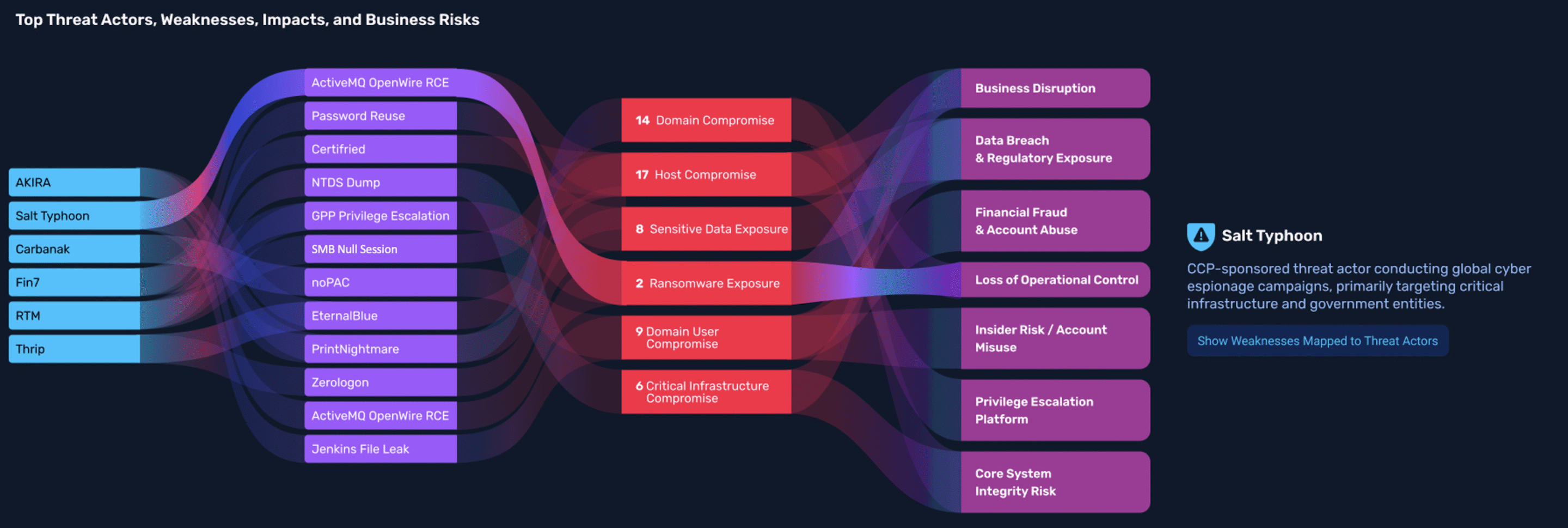
NodeZero fuses exploitability, attacker behaviour and business context into a single, explainable model of risk. GenAI reasoning ties each exploit to potential business impact — so what rises to the top reflects what an attacker could achieve, not a static score read in isolation.
Classified by what’s actually exploitable
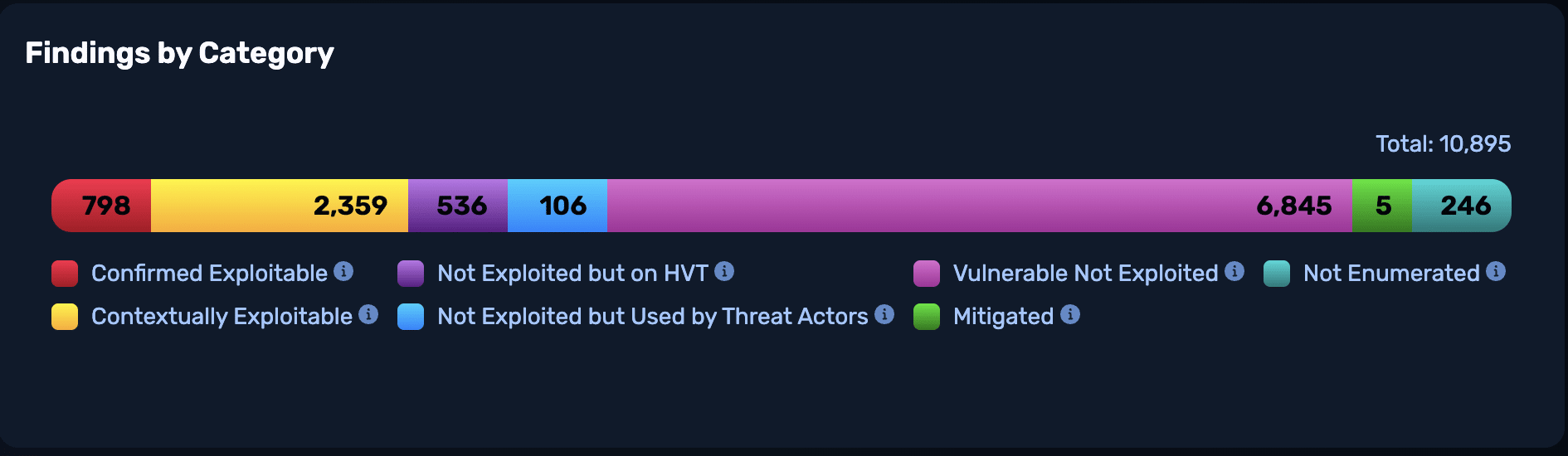
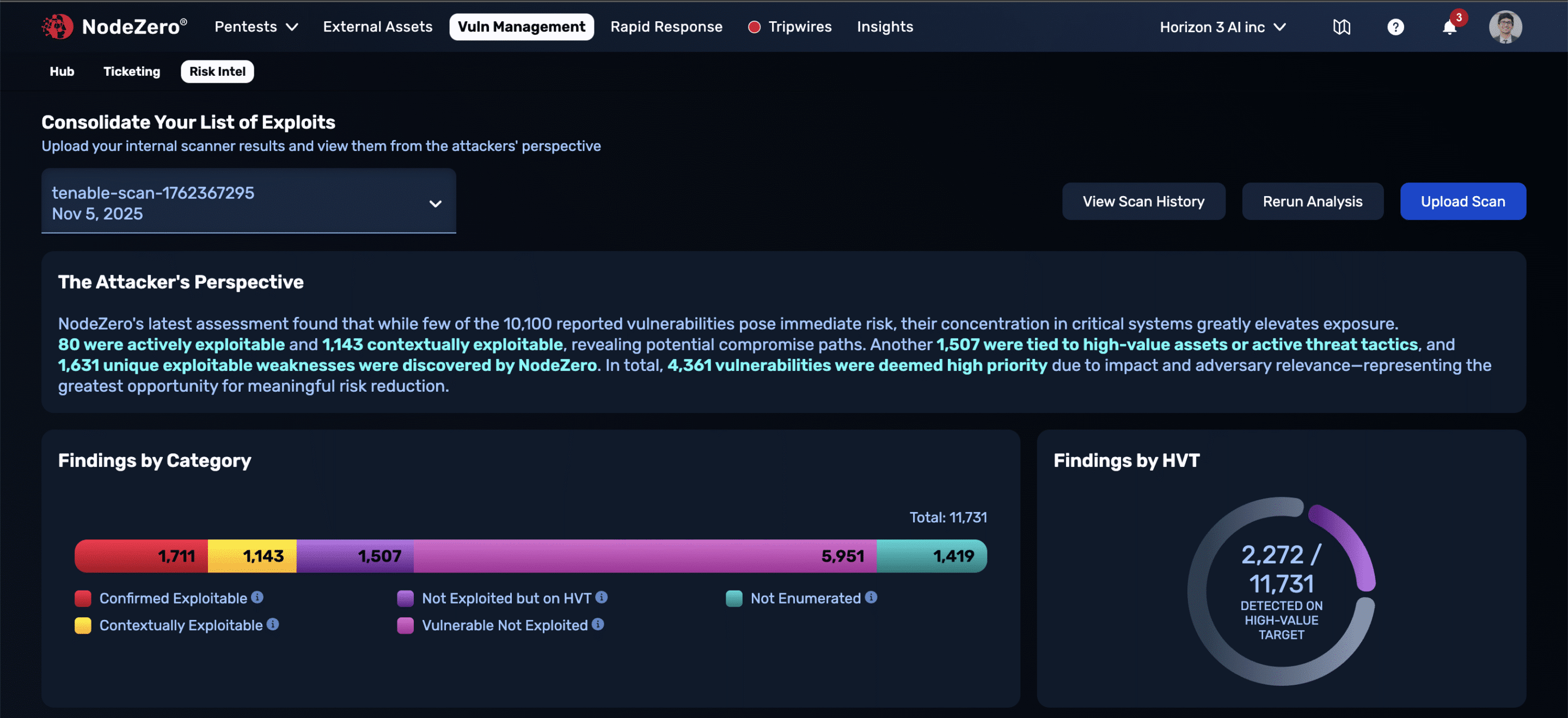
Every CVE–asset pair is auto-tagged from the attacker’s perspective: Confirmed Exploitable (validated with evidence), Contextually Exploitable (elite attackers, specific preconditions), High-Value Target Found (on a crown jewel like a domain controller), Threat Actor Pressure — measured by the Threat Actor Pressure Index, how actively real adversary groups are abusing this CVE in the wild — and Not Exploited (not exploitable in your environment).
Prove the top risks are closed
See exploitable vs non-exploitable in a single view, mapped to threat-actor behaviour and high-value targets, with direct links to the exploit evidence. Dispatch key risks to your ticketing system and download results for reporting — turning patch-window prioritisation for Essential Eight ML2/ML3 into a decision based on real attack evidence, not static scores.
Built for VM teams, trusted across SecOps
Vulnerability Risk Intelligence reduces false-positive vulnerabilities and prevents false-negative exploits — aligning detection and response with attacker-validated proof, so your VM, SecOps and OffSec teams work one prioritised list instead of three views of the same noise.
One platform, four risk lenses
Vulnerability Risk Intelligence is one of four NodeZero capabilities that turn scanner and discovery noise into attacker-validated, business-level risk.
Vulnerability Risk Intelligence
Turn scanner noise into exploit intelligence.
Threat Actor Intelligence
Know who is coming for you.
High-Value Targeting
Find what matters most.
Advanced Data Pilfering
Understand why data matters.
Prove, don’t guess — and spend on fewer tools
Cut manual triage
Skip the spreadsheet. Reveal misconfigurations and identity-driven weaknesses only elite attackers would find — and avoid false negatives.
Fewer tools, one source of truth
Consolidate vulnerability-management data in NodeZero and repurpose spend on tools that lack the attacker’s perspective.
Proof your executives understand
Show what’s exploitable, what isn’t, and what NodeZero uniquely found — focused on the business risks boards care about.
Using HVT and ADP, we finally connected vulnerabilities to board-level risk discussions.
See your scanner data from the attacker’s perspective.
Bring your Tenable, Qualys or Rapid7 export to a session with the Drochaid team.